
Natashja Haddow Brown from Massey University is researching a nasty disease: leptospirosis. Matuku Link helped with supplying Natashja and her team with freshly caught pests to discover if these carry the disease in Te Henga.
Can we find Leptospira in Te Henga?
Leptospira is a type of bacterium, a tiny microorganism that is invisible to the naked eye.
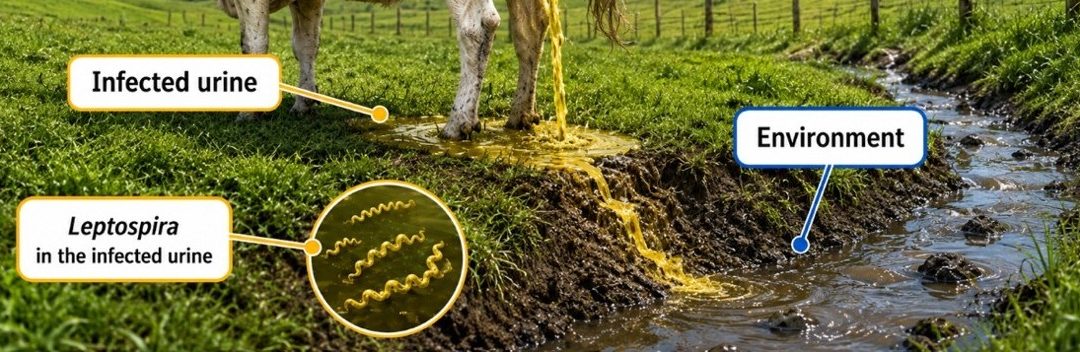
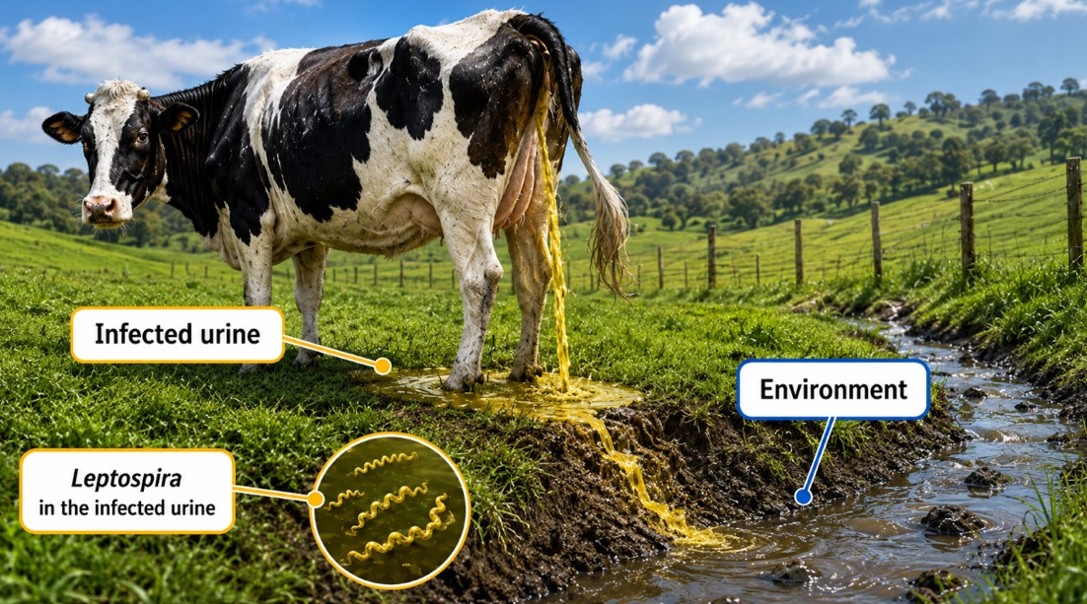
Leptospira can live in the kidneys of infected animals. When these animals urinate (wee), the bacteria can travel to the environment. After heavy rain or flooding, Leptospira can spread further through wet soil and water to puddles, streams, rivers and lakes (Figure 1).
If we have a cut or scratch that comes into contact with urine, water or soil containing Leptospira, the bacteria can sometimes enter our body and cause a disease called leptospirosis. Our pets and other animals can get leptospirosis too.
People with leptospirosis may have muscle aches, fever, headaches, or feel like they have the flu. Sometimes people can become very sick and need to visit a doctor or even go to hospital.
But, what about Te Henga… Can we find Leptospira there? And where might it be hiding?
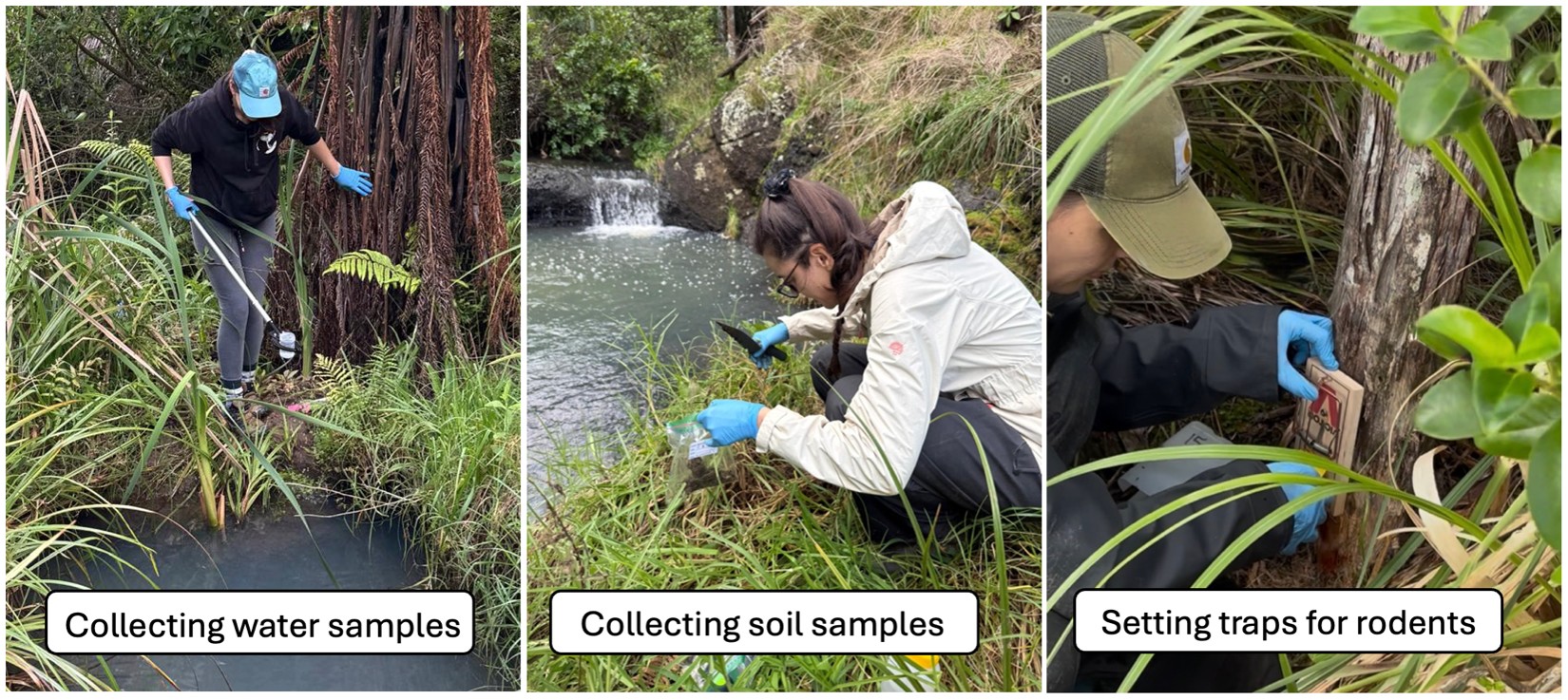
To answer these questions, a research team from Massey University is using science and detective skills to search for this tiny bacterium. We are looking for Leptospira in rats, mice, wild pigs, rabbits, dogs, horses and cattle, as well as in water and soil around Lake Wainamu, Waitī Stream and the Waitākere River (Figure 2). We are also talking with people in the community and using questionnaires to learn about how people, animals and the environment might be connected.
This is a big job, and we could not do it without the help of people from Te Henga and local groups such as Matuku Link. Together, we have collected rats and mice to investigate whether these animals are carrying Leptospira.
How was Matuku Link involved?
To know if pests carry Leptospira, we needed freshly caught rats, stoats, weasels and possums – Matuku Link’s trappers caught these for us and kept them in the freezers at Matuku Link. They installed a whole new line of rat traps in an area withhout previous trapping – a win-win when 15 rats were caught in the first two weeks!
Why is this investigation important?
If we know where Leptospira is hiding, we can learn more about how people and animals might get the disease. This can help us understand how to reduce the risk of leptospirosis and keep people and our animals safe.
Recent Comments